niedziela, 31 maja 2015

To be a good translator


Do you want to work as a translator? So if you are looking to become a translator you  need more than just knowledge of another language to be considered for a job. Definitely, the professional translation industry would need someone who is articulate in different languages, more than his native tongue. You need to be eloquent to be able to translate documents fittingly. You must know how to expand your resources in interpreting the language you are assigned to. That is one way of being effective and becoming a suitable candidate for more professional translation projects. Being skilled in research also means that you know the translation tools available to you to help you carry out the task at hand. You must be knowledgeable in different subjects, fields, and industries to get as much work as is available. You must remember that you need to be an authority in the topics or subjects that you claim you can handle. You cannot be a 'jack of all trades, master of none' in the translation service industry. Moreover, an effective translator is someone who can meet his deadlines.

 
                                                                                                          google.com


niedziela, 24 maja 2015

Italian? Why not?!


Italian is beautiful, fun and sexy. Here I would like to show you 8 reasons to learn Italian.

  1. According to UNESCO the most of the world’s cultural heritage sites are in Italy. 
  2. Do you like music, design, arts, architecture, opera? Knowing Italian is greatly beneficial in several career fields because Italy is a world leader in the culinary arts, interior design, fashion (Milan!)m graphic design, furniture design but also machine tool, manufacturing and construction machinery.
  3. Travelling in Italy is pleasurable. I think that of all the countries in the world there is none more magical than Italy. This place is the tourist paradise! So speaking Italian allows you to meet amazing people and get to know this wonderfully rich culture.
  4. You don’t need subtitles to see Fellini’s or Visconti’s movies.
  5.  Italian is recognized as one of the most beautiful spoken languages on the planet. If you want to pick up a girl you always can speak with Italian accent.
  6.  Italian has the highest number of words for describing food! Italian cuisine is rated as one of the best in the world. Order with confidence on your next visit at an authentic Italian restaurant and show off your prowess with your impeccable pronunciation (how to say bruschetta or gnocchi)
  7. The Italian language is the closest to latin. Knowing Italian will help you in learning Spanish or French. Learning a foreign language will improve your problem solving skills, your creativity and will be a powerful open minder. It gives you a greater opportunity, through comparison, to know yourself better, your culture and your language.
  8. Read Camilleri’s novels without English translation.
 

piątek, 22 maja 2015

Camilleri - Italian writer


Andrea Camilleri, Italian writer, in 1994 pubblished the first series of novels La forma dell’Acqua featured the character of Insepctor Montalbano who is a fractious Sicilian detective in the police force of Vigata, an imaginary Sicilian town. For Camilleri, language is one of the main characters of the story. In any novel he uses numerous variteties of Italian, dialect from Italian regions, in particular Sicilian,  Anglicisms, slang, neologisms and much more.

It is clear that the conscious use of dialect constitutes the most obvious element of this writer’s style. A translator faces two different challenges of various difficulties. The first is the problem of translating Italian into English. The second is the frequent use of the Sicilian language, in particular in dialogues with people who for one reason or another speak in that language. The easiest way of translating these dialogues is to add a qualifying sentence - these words were spoken in Sicilian. Another way could be to translate the dialogues into slang or colloquial speech.


If you’re curious about Camilleri’s Sicilian, we can visit the Dizionario on the Camilleri Fans Club website. This dictionary provides a list of the Sicilian vocabulary utilized in Camilleri’s literature. It’s important to know that Camilleri italianizes most of his Sicilian to make it more understandable for his non-Sicilian readers.

niedziela, 3 maja 2015

Dialect - could we translate it?

What is dialect?
Dialect is a form of a language that is spoken in a particular part of country or by a particular group of people. When we translate a book we can simply ignore the dialect and translate it as standard language. But an author has chosen to use dialect for a reason, dismissing that choice isn’t respectful of the author or his work. Of course, for some languages, ignoring the dialect may be the only solution. If we decide to translate the dialect, what choices do we have?

- Geographic translation – it means that we choose an equivalent region in the target culture and pick one of its dialects.

-  Translating socioeconomically – it means that a translator working with an upper class dialect in the source text chooses an upper class dialect in the target language. When the original author uses a lower-class dialect, the translator can use a lower-class dialect from another region. Translating socioeconomically can be challenging if the source cultures have very different populations and thus different class-based dialects.

Moreover, if an author chooses a dialect to suggest a character is stupid, an equivalent dialectical representation can be picked in the target language. But we can remember that not all languages have dialects with the same stereotypes.

sobota, 2 maja 2015

The five Neorealist films to watch

Neorealist cinema is a new strain Italian film-making took shape in the Second World War. I think that Neorealism was born in part of necessity: new directors wanted to show the realty in documentary style giving the lead roles to non-professional actors, with mixed results.


The five Neorealist films to watch:

1. Roma, città aperta (Robert Rossellini) - the film was shot on Roman streets six months after the Nazis left. It told the tense story of partisans fighting Germans. Anna Magnani emerged as Neorealism's leading lady. 

2. Sciuscià􀀃 (Vittorio De Sica) -  the film describes the story of two shoeshine boys, played with impressive subtlety by a couple of untrained actors, come unstuck in unsympathetic post-war
Rome.

3. La terra trema (Luchino Visconti) - Vinsconti describes living conditions in the Sicily, using Sicilian dialect, rendered the lives of poor, exploited fishing folk.

4. Ladri di biciclette􀀃 (Vittorio De Sica) - The film describes  a destitute man and his son scour Roma for the stolen bike on which his job hanging posters depends. Ladri di biciclette has become the most acclaimed of the Neorealist films, combining critical and commercial success.

5. Riso Amaro (Giuseppe De Santis) -The film describes migrant workers in the paddy fields of the Po Valley.


niedziela, 26 kwietnia 2015

21st century best-sellers


I would like to show you the 21st century best-sellers of Italian literature.


1. 'La rabbia e l'orgoglio' is a book written by Oriana Fallacci. Controversial commentary on Islam and European Muslims, originally published as a series of articles in the Correre della Sera. 'La rabia e l'orgoglio' (The Rage and the Pride) have been translated into idiosyncratic English by Fallaci herself


2. 'Io non ho paura' by Niccolò Ammaniti. Someday a boy finds a kidnap victim in an old farmhouse and then discovers his parents are in on the sercret. Ammaniti got the idea for the book during a road trip to Apulia in the late 1990s. The story is based on a true story of a kidnapped boy from Milan drugin the Anni di Piombo in the 1970s, a time of terrorism in Italy. At the time, it was common to kidnap people from the North and transport them to the South, where they would be hidden and sametimes killed inless the ransom was paid.


3. 'Senza sangue' by Allesandro Baricco. A young girl hides from the muderers of her parents, but grows up to avenge their deaths.

4. '100 colpi di spazzola prima di andare a dormire' by Melissa Panarello. Blockbuster diary of a schoolgirl's sexual odyssey. Melissa's secret life is concealed from family and friends, revealed only in her diary entries.

5. 'La pazienza del ragno' by Andrea Camilleri. The eighth in the wildly popular Insepctor Montalbano series of crime novels.


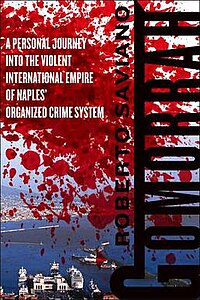
Gomorrah by robertosaviano.jpg
6. 'Gomorra' by Roberto Saviano. A frightening non fiction novel about the Camorra, the Naples mafia. The author lives in hiding following death threats. In this book Saviano employs prose and news-reporting style to narrate the story of the Camorra, exposing its territory and business connections.


piątek, 3 kwietnia 2015

Ferdydurke - translation problems


Gombrowicz's language is very difficult because the Polish author used several types of idiomatic Polish-colloquial, the language of Polish peasants and the literary language. Difficult words to translate is Polish exclamations like "Jakże!". It was trasnlated by Danuta Borchardt as "Oh, sure!". The same problem is with the word "onegdaj" as "once" and "chłystek" like "a juvenile". Another problem is the Polish prefix "niedo" which was trasnlated as "not quite" - "niedoświadek ludzi niedoludzkich" as "the little not-quite world of the not-quite humans".
Moreover, the use of diminutives is very pervalent in Polish. Gombrowicz used them in the service of the ridiculous. The sentence "noga stała się nóżką, ręka - rączką, istota - stotką, dzieło - dziełkiem, ciało - ciałkiem" was translated by Danuta as "my leg became a little leg, my hand - a little hand, my persona - a little persona, my being - a little being, my oeuvre - a little oeuvre." Another problem is inversion which in Polish appears and changes style. As an example is "Słowacki wielkim poetą był" - Danuta, in order to make it more similar to the Polish original, translated it as "Because Słowacki - oh, what a great poet he was". The novel is really challenge for translators.